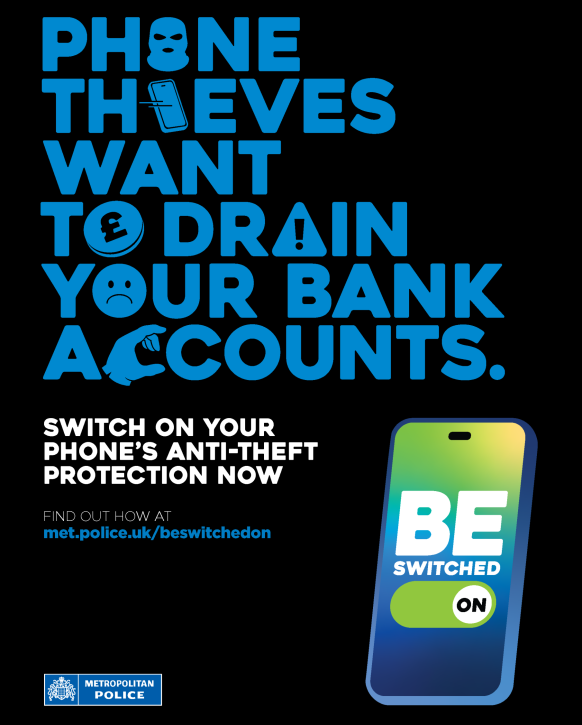
Smartphone theft is not just about losing a device, criminals are increasingly targeting phones to gain access to bank accounts, personal information and sensitive data. By taking a few simple steps, you can make it much harder for criminals to access your data if your phone is stolen. The Metropolitan Police has launched its ‘Be Switched On’ campaign to raise awareness of this growing threat and share simple steps everyone can take to reduce the risk of their phone being used to commit fraud if it is stolen.
A stolen phone can quickly become much more than an inconvenience. Criminals may attempt to access banking apps, emails, social media accounts and other personal information stored on your device. Across London, more than £4.3 million has been stolen through phone-enabled fraud, with victims losing an average of £12,000. In some cases, individual losses have reached tens of thousands of pounds, leaving victims to deal with financial loss, identity theft and the lengthy process of securing their accounts.
The Metropolitan Police continues to target organised criminal networks responsible for phone theft across London, including major operations that have disrupted gangs involved in stealing and exporting thousands of devices. Locally, the Marble Arch Street Team works closely with the police and regularly patrols the district’s busiest areas, providing a visible presence and supporting businesses, workers and visitors. The team patrols the BID area Monday to Thursday, 8am–10pm, and Friday and Saturday, 8am-midnight, and can be contacted by phone or WhatsApp on 07825 750 777 or 07852 566 122.
While enforcement remains a priority, prevention is an effective ways to reduce the risk of becoming a victim. By taking a few simple steps today, you can help protect your phone, your money and your personal information.

Common tactics used by phone thieves
Phone thieves use a range of tactics to steal devices quickly and gain access to the personal information stored on them. Common methods include:
- Riding bicycles, e-bikes or scooters to snatch phones from people using them on the street before making a rapid escape.
- Using distraction or deception, such as pretending they need to borrow a phone or asking someone to enter a phone number on their behalf.
- ‘Shoulder surfing’ by watching people enter their passcode before stealing the device.
- Taking phones on café or restaurant tables, often in a matter of seconds.
When using your phone outdoors, keep it away from the roadside where possible, stay aware of your surroundings and put it away as soon as you’ve finished using it.
Protect your phone
One of the simplest ways to protect yourself is to activate your phone’s built-in anti-theft protection.
For iPhone users – Turn on Stolen Device Protection by going to:
Settings > Face ID & Passcode > Stolen Device Protection
This requires additional authentication, such as Face ID, before sensitive settings or information can be accessed from an unfamiliar location.
For Android users – Enable Theft Detection Lock by going to:
Settings > Security and Privacy > Theft Protection > Theft Detection Lock
This feature can detect movements associated with phone snatching and automatically lock your device.
There are several other simple steps that can significantly reduce the risk of criminals accessing your personal information:
- Keep your phone and apps updated with the latest software and security.
- Use Face ID, Touch ID or fingerprint authentication alongside a strong passcode instead of a simple four-digit PIN.
- Turn off message previews on your lock screen to prevent thieves seeing one-time passcodes or banking alerts.
- Avoid storing photos of passports, driving licences or other sensitive documents on your phone.
- Use different, strong passwords for banking, email and payment apps.
- Make a note of your phone’s IMEI number by dialling *#06# and keep it somewhere safe. Your network provider can use this number to block a stolen device.
Stay alert in public
Simple everyday habits can also help prevent your phone from being stolen:
- Keep your phone out of sight when you’re not using it.
- Avoid leaving your phone unattended on tables or counters.
- Be aware of who is around you when entering passcodes or using banking apps.
- Never hand your phone to someone you don’t know or have only just met.
- Put your phone away once you’ve finished using it, especially in busy public places.
If your phone is stolen
If you’ve been injured, feel unsafe or the theft has just happened, call 999 immediately. Otherwise, report the theft by calling 101 or reporting it online as soon as possible.
You should also:
- Lock your phone remotely using Lost Mode (iPhone) or Remote Lock (Android).
- Contact your bank and freeze any affected cards or accounts.
- Notify your mobile network provider.
- Change the passwords for your email, banking and social media accounts as soon as possible.
- Monitor your accounts for any suspicious activity.
How businesses can support the campaign
Businesses across Marble Arch can play an important role in helping to raise awareness of phone theft and protect staff, customers and visitors.
The Metropolitan Police is encouraging employers to share the Be Switched On campaign with their teams by circulating its digital leaflet and promoting the simple steps employees can take to secure their phones. Businesses may also wish to display campaign posters in staff rooms or other employee break areas, where people can safely scan the QR code or visit the campaign website without needing to use their phones in public.
Please avoid displaying posters in public-facing locations where they may encourage people to take out their phones on busy streets.
Campaign resources, including posters and digital assets, are available to download from the Metropolitan Police and will be updated as the campaign develops.
To find out more about the Be Switched On campaign and access further advice, visit the Metropolitan Police’s dedicated campaign page.