

Updated 17 June 2025.
The Mayor of London, Sadiq Khan, has today (17 June 2025) announced he will move ahead with plans to pedestrianise Oxford Street and revitalise the area following overwhelming public and business support for his proposals.
Following extensive public consultation, attracting 6642 responses, a new report published today shows Londoners and businesses overwhelmingly back the Mayor’s ideas. Almost seven in 10 expressed support for the Mayor’s proposed interventions to regenerate Oxford Street, while two-thirds are supportive of the pedestrianisation idea specifically.
Proposals for pedestrianising Orchard Street to Great Portland Street will be published later this year, and City Hall aims to establish a Mayoral Development Corporation by 1 January 2026 to drive the area’s transformation.
Read the full consultation report.
——————————————————
Consultation has commenced on the creation of a Mayoral Development Corporation (MDC), enabling the Mayor of London to bring forward proposals to pedestrianise Oxford Street.
The consultation, released on 28 February 2025, set out how the Mayor proposes to achieve the vision of a pedestrianised Oxford Street, the proposed area, powers and timetable.
The Mayor aims to rejuvenate Oxford Street and ensure it remains a global leader for shopping, leisure and outdoor events, competing with the likes of Fifth Avenue in New York and the Champs-Élysées in Paris. The rejuvenation would also act as a magnet for new investment and job-creation, driving growth and economic prosperity.
Whilst the Mayor acknowledges the work of Westminster and Camden Councils and New West End Company, reducing the number of candy shops and bringing a more diverse offer to the street, Oxford Street is not able to compete with the range and quality of Regent Street and Bond Street, suffering from poor gateways, public realm and townscape.
To achieve the plans, the Mayor is proposing to establish a Mayoral Development Corporation (MDC). The creation of this dedicated authority covering the full length of Oxford Street and its immediate surroundings, would “facilitate the necessary leadership” to improve the environment, expand the retail and leisure offer, and activate new public spaces created in part through pedestrianisation. It would ensure a coherently designed, transformed space that could be promoted as a global retail and leisure destination.
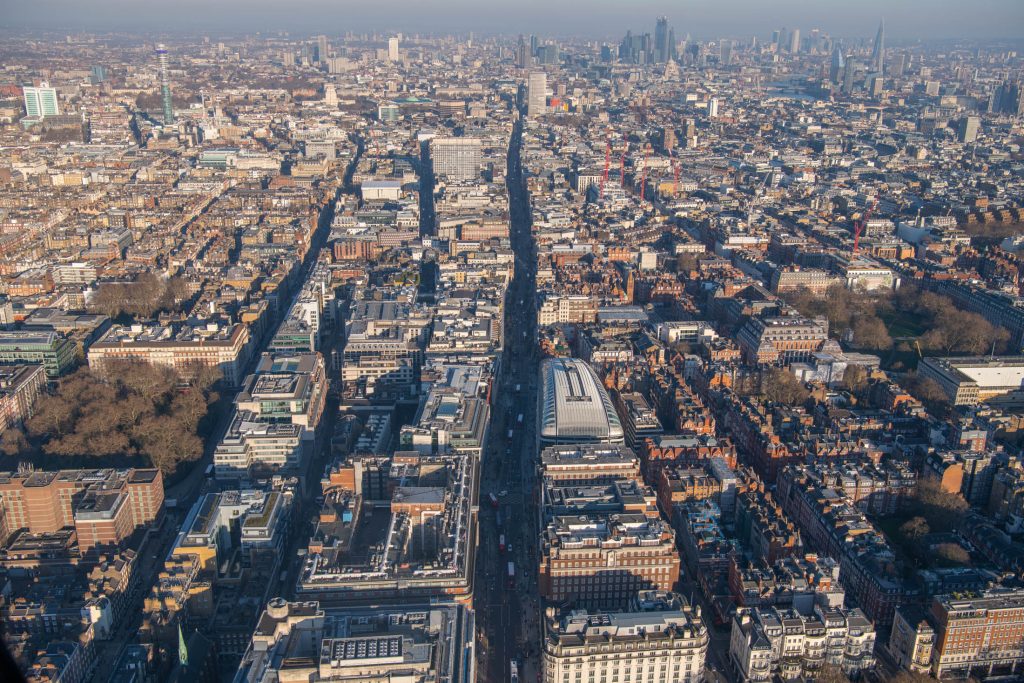
You can view the full details here.

What area will the MDC cover?
The proposed MDC will cover the top of Park Lane and Marble Arch from the west, all the way to New Oxford Street in the east.
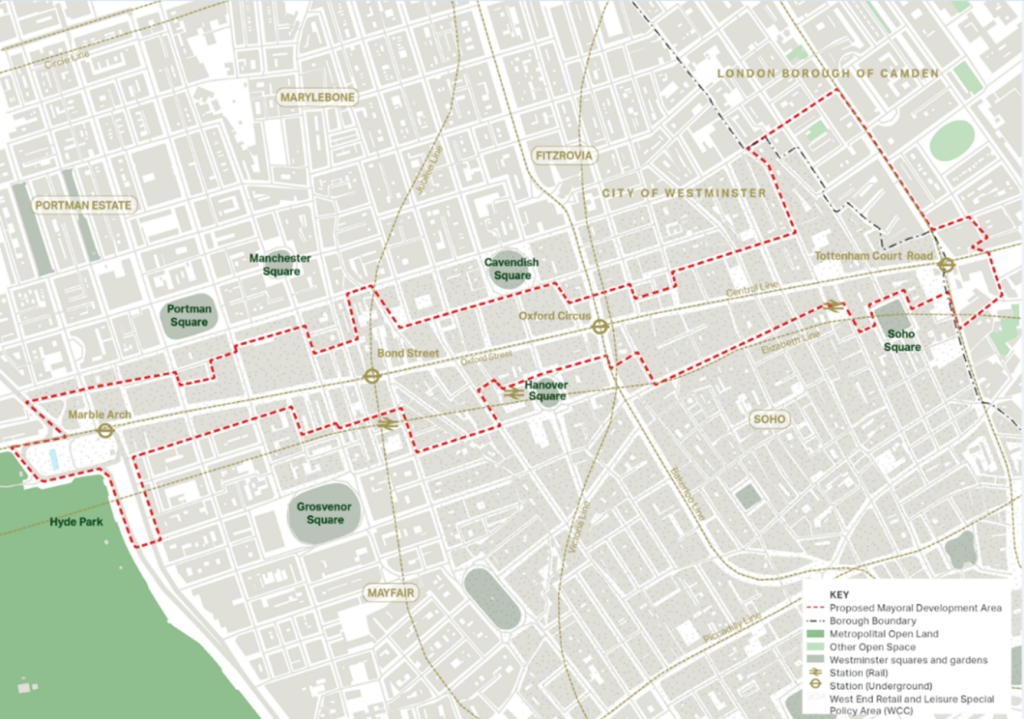
What powers would the Mayor have?
The Mayor is seeking responsibility for plan-making (setting the planning policy framework) as well as the determination of planning applications, enabling the development and delivery of a single vision for the whole of Oxford Street that reflects its national and local significance.
The GLA will also take on highway responsibility for the road itself, meaning it becomes part of the Transport for London Road Network (TLRN), known as a red route.
Where Community Infrastructure Levy (CIL) is payable on developments within the MDC area, the GLA will retain the neighbourhood portion and Westminster Council will retain the strategic portion, enabling the council to fund public realm and carbon reduction schemes.
What might pedestrianisation look like?
The Mayor considers that there is a compelling case for the phased pedestrianisation of Oxford Street to create a more attractive local environment and improve the quality and use of the public realm. The priority section for pedestrianisation is Selfridges (Orchard Street) to Oxford Circus. There is a recognition that pedestrianising Oxford Circus to Tottenham Court Road is a major challenge and may follow after completion of the first stage.
This transformation would remove most of the traffic on Oxford Street and, in turn, improve air quality and improve road safety. It would create new opportunities for the use of the street space, including for a range of events and activations, attracting new visitors and raising Oxford Street’s profile and reputation as a destination.
North-south cross street access will be maintained. Access for cyclists would be changed, with alternative routes identified.
The number of buses running along Oxford Street has significantly decreased from over 130 per hour in 2016 to 35 per hour today in each direction. There are currently eight bus routes during the day and nine night bus routes serving Oxford Street. Under pedestrianisation there would be a relocation of bus routes, stops and stands.
If taxi and private hire access were to be restricted, access would be retained in surrounding streets.
Deliveries and servicing would ideally take place from the rear or the side of business premises, to protect residential amenity. Delivery consolidation schemes will be promoted as part of any pedestrianisation scheme.
Protection from hostile vehicle attack is a priority and likewise retaining access for emergency services.
What might this mean for the area around Marble Arch?
The inclusion of Marble Arch and the area surrounding the arch is a positive step for the transformation of the public realm at this vital gateway to Oxford Street and Edgware Road. There is widespread support for a scheme that creates a brand new civic space and provides safer routes for pedestrians and cyclists. Marble Arch London BID is part of the team promoting this element of the MDC.
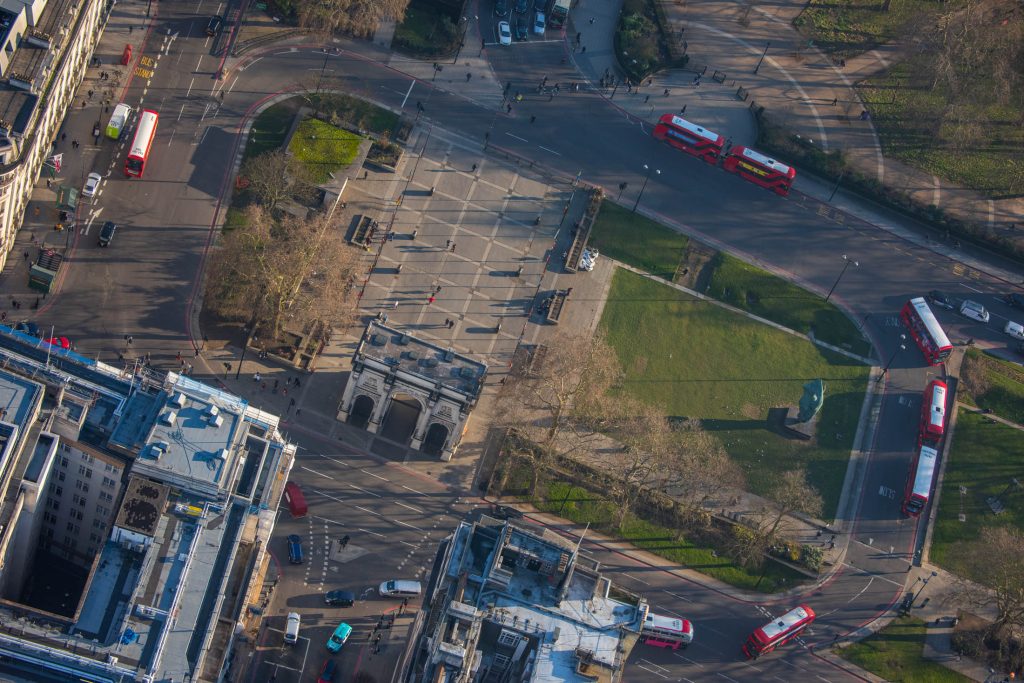
We are looking forward to working with the Mayoral Development Corporation following its encouraging announcement that Marble Arch will be included in its Oxford Street transformation plans. We hope to work together on a new gateway to Oxford Street delivering a significant public realm scheme which will create a brand new civic space in the heart of London.
Kay Buxton, Chief Executive, Marble Arch London BID
What is the response from Westminster Council?
Westminster issued a statement on 28 February setting out their reaction to the launch of the consultation phase. The council’s statement cites a list of concessions made by the GLA since the MDC was first mooted in September 2024, including bringing forward improvement to the eastern stretch of Oxford Street, a slight reduction in the proposed MDC boundary, the retention of north-south access routes, the introduction of electric buses, freight consolidation and a minimum of three seats out of 12 on the MDC board.
Subject to the outcome of the Mayor’s consultation, our role is to ensure that the Mayor's proposed Oxford Street Transformation delivers for local communities, as well as for London. We have already fought hard to secure numerous improvements from the Mayor of London to ensure that any plans for Oxford Street are deliverable and meet the needs of local residents, businesses, and wider London. We seek to work pragmatically with the Mayor's team to ensure a bright future for the nation’s high street as well as for our residential communities and businesses.
Cllr Adam Hug, Leader of Westminster Council
What are the next steps?
Consultation continues until 2 May 2025.
Once the consultation has closed, the Mayor will consider the responses and publish a report setting out his views and the conclusions that he has reached, including submitting any updated proposals in relation to the designation of a Mayoral Development Agency (MDA) to the London Assembly for consideration. Following the end of the Assembly’s consideration period, he would then notify the Secretary of State of any decision to designate the MDA and the Secretary of State would establish an MDC.
Subject to the outcome of this consultation and of any subsequent consideration by the London Assembly, the Mayor’s intention is for the MDC to be established by 1 January 2026.
Should the principle of pedestrianisation be agreed, there would be further consultation on the detailed design and implications for any permanent pedestrianisation.
