

Updated 18 February 2026
Transport for London has now confirmed that pedicab regulations will be introduced and enforced in stages over the coming year under the Pedicabs (London) Act 2024.
From March 2026, drivers will be able to apply for licences, with mandatory licensing for drivers and operators from 30 October 2026 and for vehicles from February 2027. The new framework introduces formal licensing requirements for drivers, vehicles and operators, including enhanced DBS checks, English language and safety assessments, regular vehicle safety inspections, road legality standards and a ban on externally amplified audio.
Subject to approval, maximum fares will also be introduced from 30 October 2026 for the first time. Proposed caps include a base fare of up to £5, a per-minute charge of up to £1, and an additional charge of up to £3 per extra passenger.
TfL has published its consultation report following 2,468 responses and on-street engagement with drivers. The regulations aim to professionalise the industry, improve safety, increase fare transparency and reduce disruption across central London.
Full policy details, licensing information, key implementation dates and guidance are available on TfL’s pedicab webpage.
_____________________________________
Updated 10 September 2025
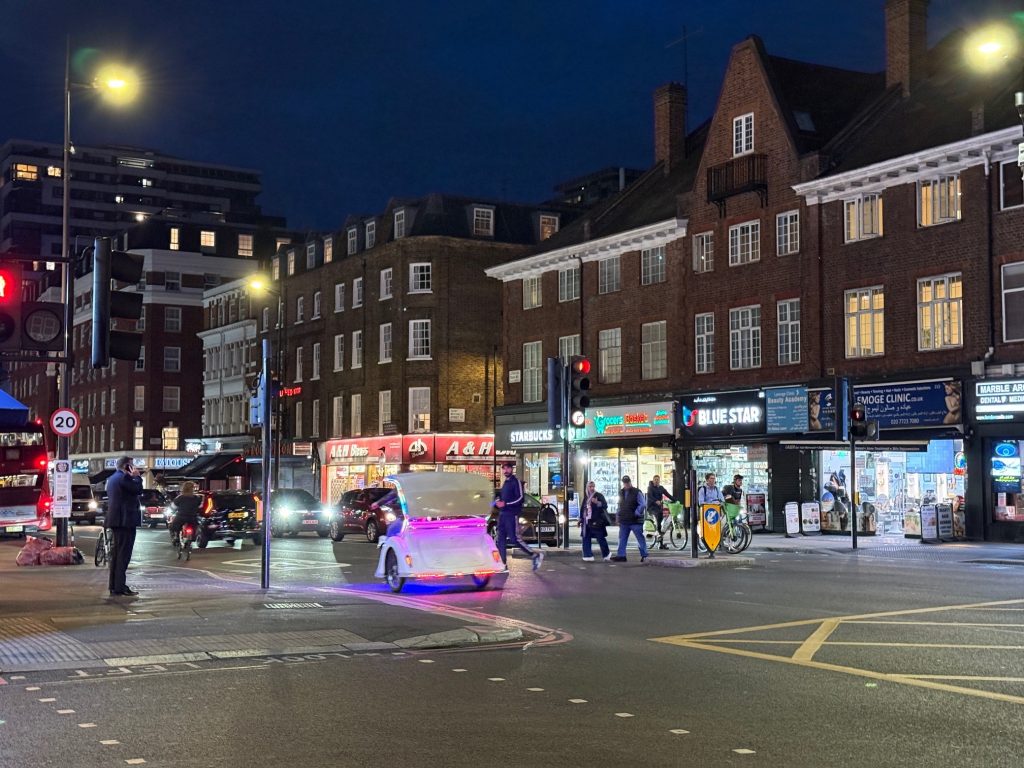
On 9 September 2025 Transport for London (TfL) launched their second consultation seeking views about licensing and regulating Pedicabs in London.
One of the main aims for regulating pedicabs in London is to make them as safe as possible, including ensuring that they are driven, maintained and operated in a safe and professional way. This second consultation is about the detailed licensing requirement for pedicab drivers, vehicles and operators. The feedback TfL received from the first consultation held earlier this year helped shape these requirements.
The licensing requirements could mean:
- Driver Minimum Requirements: There is a minimum age of 18 to apply and all should be able to prove that they have the right to live and work in the UK. All pedicab driver licence applicants would need to have an enhanced Disclosure and Barring Service (DBS) and barred list check. Licensed pedicab drivers would need to register with the DBS Update Service and TfL would carry out checks every six months. Pedicab driver licence applicants would need to provide a valid DVSA theory test certificate. Pedicab driver licence applicants who already have a full, current Great Britain, Northern Ireland, European Union or European Economic Area driving licence, would not have to provide a valid DVSA theory test certificate. They would need to pass an English language skills assessment, and a safety, equality and regulatory understanding (SERU) assessment to demonstrate they understand their role and responsibilities as a London pedicab driver.
- Driver Safety and Transparency: TfL would issue licensed pedicab drivers with a pedicab driver ID badge which must be worn at all times when the individual is working as a London pedicab driver. All licensed pedicabs would have a licence plate fixed on the pedicab showing the licence expiry date and how many passengers the pedicab is licensed to carry. All pedicab operators would need to have an address in London from which they would operate and that all relevant permissions have been obtained from the relevant authorities to allow them to operate from that location.
- Insurance: All pedicab drivers would need to hold a valid public liability insurance policy to the value of £5m (or an equivalent insurance) and the certificate of insurance would need to be available for inspection by TfL at any time.
- Pedicab Fares: Regulated fares are to be based on journey time only, with a per minute rate and a minimum fare (this may vary according to time of day or other factors determined by TfL). There could be an extra charge for additional passengers. The journey time is to start once all of the passengers are safely in the pedicab and seated. To contribute to passenger security, all pedicabs must accept card and contactless payments via a TfL approved device.
- Noise: TfL are proposing to prohibit the use of externally amplified audio on pedicabs. The aim is to reduce noise disruption, particularly in central London, and to help create a calmer, more respectful environment for residents, businesses and visitors. TfL recognises that some pedicab services, such as guided tours, rely on audio to enhance the passenger experience. To support this, internally amplified systems, such as headphones or hearing loop systems would be permitted, along with hearing loops. These technologies allow passengers to receive audio content directly, without disturbing others nearby.
- Locations: TfL propose that pedicab drivers should only stop to pick up or drop off where it is safe to do so for the passengers, driver and other road users, where stopping is permitted and where their vehicle will not cause an obstruction. Stopping to pick up or drop off passengers in bus lanes, on pavements, pedestrian crossings, or other restricted areas would not be allowed. Pedicabs will be allowed to be booked with a licensed pedicab driver, with a licensed pedicab operator or hired in the street.
- Vehicle Safety: Only manufactured designed and built pedicabs will be licensed, pedal powered pedicabs converted to be electrically assisted will not be licensed. Licensed pedicab drivers, operators and vehicle owners would be required to undertake regular (every three months) safety checks of their pedicabs, which would include checking items such as brakes, batteries and other mechanical parts, keep records and provide evidence to TfL of the outcome of these checks when required. Records of the inspections and maintenance must be retained for a minimum of 24 months and be made available to authorised compliance officers upon request. Pedicabs must pass an inspection before being licensed and then must pass a new licensing inspection each year to remain licensed. All pedicabs will be required to be fitted with appropriate lighting.
- Compliance: TfL’s compliance team would be undertaking a wide range of compliance activities, including on-street checks of pedicab drivers and vehicles.
If an applicant meets all of the licensing requirements, we propose that a pedicab driver’s licence would be issued for up to one year. Pedicab driver licences would not be transferable.
To find out more please visit the TfL webpage to read more about the regulations and provide your feedback. This second consultation will be open until 20 October 2025.
_____________________________________
Updated 26 June 2025
Transport for London (TfL) have released the report of consultation, with 7,699 responses received. You can read the consultaion report here.
The responses and comments provided in this consultation are being used to develop detailed policy proposals for pedicabs in London. These detailed policy proposals will be subject to a final consultation which will launch later in 2025, alongside an Integrated Impact Assessment. Responses from the second consultation will be used to form pedicabs regulations.
_____________________________________
First published January 2025
Transport for London (TfL) has launched a six-week consultation to understand people’s views on pedicab regulation, following the introduction of legislation in 2024.
The pedicab regulation consultation covers a wide range of issues on which TfL are seeking views, from users to drivers themselves, about everything from fares, through vehicles to the operators.
The main driver for the regulation of pedicabs is user safety, fare transparency, anti-social behaviour and noise. TfL propose a regime that mirrors that of taxi and private hire vehicles, but suited to the pedicab market.
The consultation focuses on pedicabs which are made available with a driver for carrying passengers for payment including cargo bikes that can or are used to transport passengers. It does not cover vehicles used to carry freight or other non-passenger carrying services nor does it relate to people that use pedicabs for personal use only.
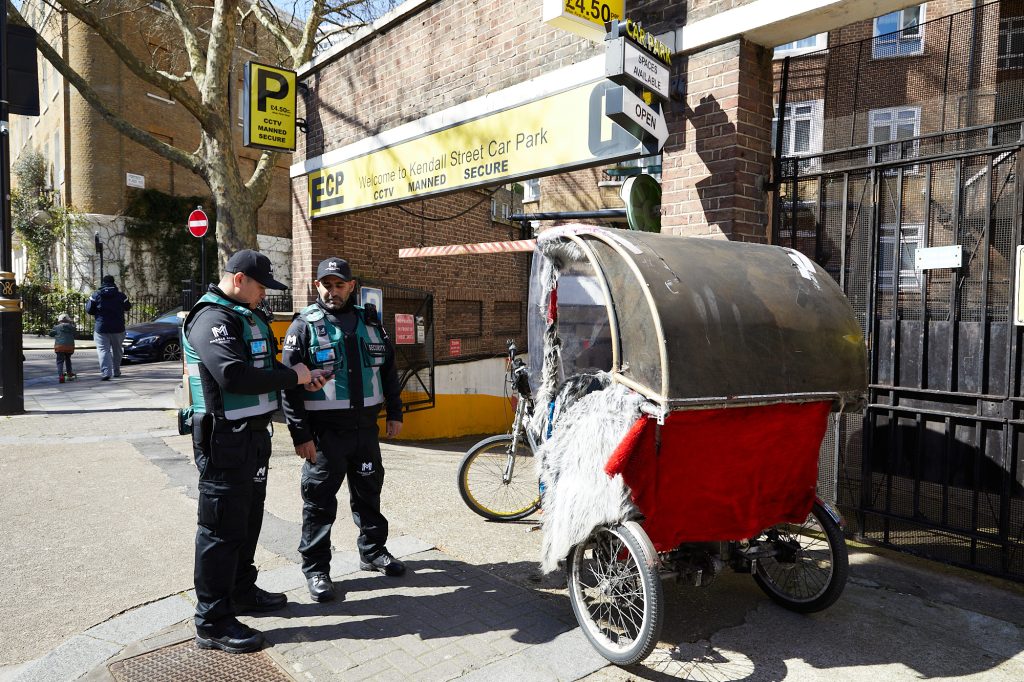
The consultation covers a whole raft of ideas and measures, including vehicle safety, driver checks and compliance, where pedicabs can pick up passengers, music and fares. Consultation closes on 7 March 2025. You can visit the main TfL consultation page or read our summary of the key points below.
Keep safe using public and private transport while out and about, follow our safety tips.
The Pedicab Driver and Operator
If a person intends to drive a pedicab for hire to passengers in London, TfL propose that a pedicab driver’s licence would be required, issued annually. London pedicab drivers should be required to meet the same or similar requirements that are currently in place for London licensed taxi and PHV drivers.
Under the proposals those intending to drive a pedicab would need to make an application to TfL for a licence and will need to meet a minimum set of criteria.
- A minimum age of 18 years old
- Hold a full DVLA, Northern Ireland, or other EEA state driving licence or can show that they have successfully passed the DVSA theory test
- UK and overseas criminal checks
- Meet medical fitness standards
- English language skills
- Demonstrate they understand their role and responsibilities in terms of safety, equality and the regulations they should follow
TfL is considering whether there should be a requirement for safety equipment for pedicab drivers such as high-visibility jackets, cycling footwear and saddle requirements as per the guidance issued in the Highway Code. Regulations would require pedicabs to have appropriate insurance in place at all times, which includes while carrying or waiting for passengers.
If a person, company or other organisation propose to take bookings for the hire of pedicabs operating in London, TfL propose they will need a pedicab operator’s licence. Applicants would need to meet the following minimum requirements in order to be a licensed as an operator:
- The right to work in the UK
- To be of good character, assessed via a basic Disclosure and Barring Service (DBS) check and to meet the same character standards as PHV operators
- To be of good business repute
- To have a fixed address in London
Pedicab operators are likely to play an important role in providing pedicab services and are likely to have a number of responsibilities in delivering these services. TfL is proposing the responsibilities that would apply to operators could be:
- Ensure drivers and vehicles meet licensing requirements
- Maintain, manage and retain records
- Ensure bookings are only allocated to licensed drivers and vehicles
- Hold appropriate insurances for their business and operations
- Have processes in place for dealing with complaints and lost property
Pedicab Use - where they can pick up, use of the road network and music
Pedicabs drivers currently pick up passengers while standing in the street (called plying for hire) and take them to a mutually agreed destination. In considering passenger safety TfL will review the way pedicabs currently operate and how they should operate once regulated. This includes how and when they are engaged by passengers, parking and waiting arrangements, use of bus lanes and the impact on the road network. Options on the table include:
- Whether pedicabs should be permitted to ply for hire only
- Whether pedicabs should be prebooked only with the booking being made with a London licensed pedicab operator
- Whether pedicabs should be permitted to ply for hire and be pre-booked through a London licensed pedicab operator
The majority of pedicabs currently operate in small areas in London. TfL is seeking views on whether there should be controls in place to permit pedicabs to only operate in specific areas or whether they should be permitted to operate anywhere in London. Use of the road network is also open to comments, covering issues including:
- Whether pedicabs should be able to continue to use existing bus and cycle lanes (including cycle superhighways)
- Whether pedicabs should be treated in the same way as other cycles and not permitted to use major roads and tunnels for safety reasons
- Whether pedicabs should be permitted to stop and wait for passengers standing in the street
- Whether pedicabs should only be permitted to stop in designated pedicab stopping areas
Antisocial behaviour and noise offences are already covered by existing legislation. However, TfL is considering whether regulations should address driver conduct such as playing loud music and causing disturbances:
- Introduce controls to prevent pedicabs playing music or other audio at certain levels or at certain times of day (or both)
- Introduce controls to prevent pedicabs playing music or other audio at all times
Pedicab Fares
At present there is no consistency to the way fares are charged for a pedicab journey. TfL is proposing to introduce fare regulation to address this issue currently experienced by some pedicab passengers, and pose various options in the consultation including:
- Control and set fares which could be done using a time based, distance based or zonal based structure or a combination of these
- Publish a guide to fares but pedicab operators or drivers set their own fares which must be agreed in advance with passenger(s)
- Allow the fares to be set by the pedicab operator or driver and agreed in advance with passenger(s)
Pedicab Vehicles
It is proposed that any pedicab vehicle operating for hire by passengers in London must have a pedicab vehicle licence, including ‘party’ bikes that operate passenger pedalled tours in London.
TfL recognises that new pedicab vehicles, whether manually propelled, electrically assisted or even automated, may enter the market and they want to ensure that regulations cover existing pedicabs as well as potential future innovation. Their proposals are therefore predominantly based on those pedicabs currently in use in London.
TfL propose that pedicab vehicles are inspected regularly to ensure they remain roadworthy and safe. They also propose that regular on-street safety checks are also conducted by TfL. The frequency of the vehicle inspections has a number of options on the table:
- Carry out a formal pedicab vehicle inspection every 12 months
- Carry out a formal pedicab vehicle inspection more frequently than every 12 months
- Carry out a formal pedicab vehicle inspection less frequently than every 12 months
- Have more or less frequent inspections depending on the vehicle type e.g. a different duration if manually propelled compared to electrically propelled and why
Have your say
You can share your views by completing the TfL survey, which should take no more than 15 minutes to complete. The closing date for comments is Friday 7 March 2025. You can also feed in your comments by:
- Email: haveyoursay@tfl.gov.uk
- Telephone: 020 3054 6037 to leave your name and contact number. Please quote ‘Pedicabs’ when leaving your message.
- Write to: FREEPOST TFL HAVE YOUR SAY (Pedicabs regulations) no postage stamp required.
